


Driving Change from Cape Town: Tina Manyanya on Women, Data and Responsible Personal Loans at Wonga
In conversation with NIWE founder Sarah Johnson, Wonga South Africa’s Senior Digital Marketing Manager talks credit access, BNPL risk, and what real workplace inclusion looks like.
When Tina Manyanya described herself as a data nerd, she really means it. As the Senior Digital Marketing Manager at Wonga South Africa, she has spent more than five years turning consumer behaviour into actionable insight. Most recently, she discusses the research behind a 12,000-person survey on how South Africans are using credit to navigate the rising cost of living. I caught up with Tina to talk about the work, the women shaping fintech in Cape Town, and why responsible personal loans have a bigger impact than ever before in the modern lending world.
Sarah Johnson: Tina, thanks for joining us. For NIWE readers who haven’t come across Wonga before, how would you describe what the business does today, and how you ended up there?
Tina Manyanya: Thanks for having me, Sarah. Wonga South Africa is a short-term lending fintech based in Cape Town. We started locally in 2012 as part of the global Wonga Group and, after the UK arm went into administration in 2018, the South African business was taken over by a local management buyout. That moment was actually really important. It gave the team a fresh chance to build a personal loan provider that truly fits the South African market, rather than one designed elsewhere and bolted on to other geos.
I joined in January 2021 after roles at The Odd Number and Hoorah Group, mostly in performance marketing and programmatic. What drew me to Wonga was the chance to work somewhere that takes data seriously but also takes outcomes seriously. We measure success on whether a customer who came to us with a cashflow shortfall is actually in a better position afterwards, not just on volume. It’s kind of the opposite of the ‘churn and burn’ strategy that defined a lot of the online loan industry in the early days.
Sarah Johnson: You recently presented a substantial piece of consumer research, the 12,000-person survey on credit habits. What did Wonga set out to learn, and what surprised you most about the findings?
Tina Manyanya: We wanted to move past the stereotype that short-term credit is purely a sign of distress. The headline finding was a more honest, more nuanced picture: yes, more than a quarter of those surveyed rely on credit every month to cover essentials like food, transport and electricity. And around three-quarters of credit users told us they have no savings or emergency fund at all. That’s a sobering number.
But what surprised me was the other half of the story. A meaningful segment of borrowers told us they were using credit for forward-looking goals like education, home improvements, or starting a side business. So… credit in South Africa right now is doing two jobs at once: it’s a survival tool and it’s an ambition tool. That dual reality is what we wanted to surface, because policy and product design need to account for both.
Sarah Johnson: That insight feels really important. How does it change the way you communicate with customers, and the way you think about responsibility as a lender?
Tina Manyanya: It changes the tone quite fundamentally. If you assume every borrower is reckless, you talk down to them. If you accept that someone applying for R2,000 might be covering school fees or restocking a small business, you treat them like an adult making a calculated decision.
On the responsibility side, it means we have to be especially disciplined about affordability. South Africa’s National Credit Act sets the floor, but we go further. We cap what people can borrow based on what they can realistically repay, and we won’t push them past what they need. Our personal loans run from R500 up to R8,000, repayable over four days to six months, and the goal is always that the customer walks away in a better position than they arrived.
Sarah Johnson: Buy-now-pay-later has exploded globally and is growing fast in South Africa too. From where you sit, what should consumers, and women in particular, understand about BNPL that the marketing tends to gloss over?
Tina Manyanya: BNPL is genuinely useful when it’s used the way it’s described on the tin: a single purchase, split into a few interest-free instalments, paid off on time. The risk is the stacking. Every BNPL purchase is a separate loan in essence, so if you check out with three retailers in a week, that’s three live agreements, three payment schedules, three sets of late-fee triggers, and very often no single dashboard pulling it all together.
The other piece I’d highlight is that BNPL has historically sat in a softer regulatory zone than traditional credit. That means it’s much, much easier to stack your BNPL obligations than it would be to successfully obtain multiple short-term loans, for example. The BNPL rules are changing globally, but in the meantime, consumers should treat it with the same scrutiny they’d apply to a credit card. My practical advice: before you tap “pay in four”, ask whether you could comfortably afford the full price today. If the answer is no, BNPL hasn’t solved the problem. It has just rescheduled it.
Sarah Johnson: Let’s talk about women in the workplace. NIWE is built on the idea that corporate women need both visibility and structural support. What does Wonga actually do, day to day, that makes it a place where women can build careers?
Tina Manyanya: A few things, and I’ll be honest about which ones are structural versus cultural. Structurally, our leadership team and our broader workforce both have strong female representation. It’s not a token at the top with a male-dominated middle. Women lead in finance, marketing, customer experience and operations. That matters because junior women can see a credible path upward without having to imagine it.
Culturally, the thing I appreciate most is that Wonga treats flexibility as a default rather than a favour. We have working parents on the team, people studying part-time, people managing health conditions, and the assumption is that good work happens when people have the autonomy to shape their week. There’s also genuine investment in development: I’ve had budget and backing to upskill in areas like AI-driven attribution, which is not something every employer signs off on without a fight.
Sarah Johnson: What is still hard, either in fintech specifically or in the South African corporate environment, for women coming up behind you?
Tina Manyanya: Visibility in technical conversations is still the big one. Fintech sits at the intersection of finance, engineering and data, and women are often assumed into the “softer” side by default: brand, comms, people. I love brand work, but I also do attribution modelling and channel economics, and you have to be deliberate about claiming that space in the room. Junior women shouldn’t have to fight to be seen as technical.
The second is sponsorship versus mentorship. Mentorship is plentiful, and there are lots of senior women willing to give advice. Sponsorship, where someone with power actively spends political capital to put your name forward for a stretch role, is rarer. Companies that want to retain women need to measure sponsorship, not just mentorship hours.
Sarah Johnson: You’ve spoken before about being a self-described data nerd who starts the day with a coffee and a wall of tabs. What does great use of data look like in a responsible lending business, and where does it tip into something more uncomfortable?
Tina Manyanya: Great use of data, for us, is about including people that the formal system has historically excluded. Roughly 40 to 50% of South Africans don’t have access to formal credit, often because traditional affordability models can’t read informal or fluctuating income. Alternative data, things like transaction patterns, repayment history with non-traditional lenders and mobile signals, lets us assess someone the bureau effectively can’t see, and offer them a regulated product instead of pushing them to the 40,000-odd loan sharks operating outside the system.
Where it tips into uncomfortable territory is when data is used to extract rather than to assess. If you’re modelling someone’s psychology to maximise the fee they’ll tolerate, that’s not financial inclusion. That’s the predatory pattern regulators are right to chase down. The line, for me, is whether the model is trying to serve the customer better or simply trying to charge them more.
Sarah Johnson: Final question. What would you say to a woman reading this who is early in her career in fintech, finance or any technical field, and wondering whether she’s in the right place?
Tina Manyanya: Stay close to the numbers. Whatever your function, learn the metrics your business actually runs on, things like unit economics, cost of acquisition, retention, and default rates if you’re in credit. When you can speak the language of the P&L, you stop being someone who supports decisions and start being someone who shapes them. And find one or two senior people, not necessarily women, who will tell you the truth, including the uncomfortable truth. Polite feedback is comfortable; it’s also slow. The women I’ve seen accelerate fastest are the ones who asked for, and absorbed, the hard version. Fintech needs more of them.

Corporate Burnout: The Quiet Signs Women Miss Until It’s Too Late
Last week I opened my laptop, checked in on a work document, stared at it for twenty minutes and as of today have no idea why I opened it. Kiwi was nudging at my feet to take her out for a walk and I still couldn’t muster the energy to go. I’m not tired. It’s exactly what far too many amazing women have done only to realize what was happening to them far too late. Women report burnout at higher rates than men; yet we push through. We call exhaustion dedication. We’re so good at managing others’ wellbeing that we fail to monitor our own red flags.
A Long Recovery
There are twelve stages of burnout – from going from the peak of your game to complete collapse. It happens over the course of time. And it starts out looking all too good. You’re meeting deadlines, you’re the go-to on that extra credit assignment, you’re the reliable element on everyone’s team. From the outside in, as laudable – and almost implausible as it seems – from the inside out, your body is screaming warnings.
I’ve seen this happen time and time again with NIWE clients – unfortunate and too late warning signs occur. The marketing director who at first never had a lunch break but was still clocking out at 8PM – and then found herself unable to make simple decisions. The finance director who snapped back at her colleague asking her about a routine budget question. These women weren’t aggressive and mean; they were distressed.
You’re exhausted even when you’ve had the best night’s sleep you’ve gotten; that means your coping mechanisms are working in overdrive. It’s only this quarter, we tell ourselves. But your body knows better.
Body’s First Warning
The body sends its first line of defence through physical symptoms disguised as minor inconveniences. You’re exhausted for months – but sleep eludes you. You’ve cried over things that should have been minor irritants, a warning sign from your nervous system.
These symptoms accrue into necessary change:
You have Sunday scaries – but they manifest themselves into Monday immobilization. You sit in your car outside of work for ten minutes until you muster the will to go inside. That cup of coffee is no longer revitalizing.
You can’t focus. What took you an hour to write now takes you three. You reread the same email five times. Halfway through a meeting your brain turns off but you have to power through for the sake of maintaining an unnaturally bright demeanour for others.
Colleagues annoy the hell out of you. That talkative guy who’s hogging the conversation in your meeting is grating – and your constructive feedback turns into defensiveness.
Your sleep cycle betrays you. You’re exhausted and yet you can’t fall asleep; you’re waking up dreading how terrible today is going to be while your body merely needs to catch up with itself.
Trapped by Perfectionism
Perfectionism breeds burnout through impossible expectations. Women who push themselves to greatness become targets. Professional women who could pump out quality deliverables time and time again find a ten-word email taking three drafts. Everything is an emergency. Everything needs perfection. Once extroverted women shut down social opportunities – saying “no” to lunch; “no” to the break room because we can no longer maintain sustained energy to be social while in the office.
When Success Leads to Burnout
Mid-level burnouts occur at 54% as opposed to entry-level roles at 40% – and the further we ascend in our careers, the more vulnerable we become. We’re charged with managing upward feedback – and compassion – which reflects downward expectations to our reports while simultaneously harbouring stress from all directions.
Only 25% of companies acknowledge the extra work women do supporting employee wellbeing; we play unofficial therapists – the culture creators – the happy birthday acknowledgers – utilizing invisible labour that depletes our reserves while going unrecognized in performance reviews.
Preventative Efforts
The first stage of recovery occurs when you realize it’s not worth it – it’s not noble when you’re suffering; it won’t be sustainable, relying on personal resources won’t last long.
Detection mechanisms need to be implemented – we need weekly check-ins and personal accountability for whether you’re at 40%, 60% or 100%. If Tuesday’s 8AM meeting is ruining your Tuesday afternoon – that’s valid information to assess.
Little interventions create space to catch your breath – even if it’s as simple as lunch breaks, because sometimes that’s all we’ve got for ourselves – walking meetings instead of conference room meetings.
Easy access to healthy sustainable sources of energy – companies that provide office fruit in break rooms have sick rates 20% lower than those without. Positive energy sustains glucose levels instead of crashing from sugary snacks. Where apple slices and bananas might seem insignificant while your world is crashing down, your brain needs that sustained glucose; depletion starts slowly over time – and so does recovery.
Establishing boundaries before boundaries need to be established – no meetings before 9AM; that email can wait until tomorrow after 6PM; weekend work should only happen for true emergencies.
How To Know You’ve Overwhelmed Yourself
When you’re taking it out on others – it’s called displacement – and it’s a key warning sign. If your once-colleague-in-arms is now your archenemy, it’s your overwhelmed system realizing it’s running on empty and no one deserves that reaction from unreasonable stress.
One in five workers will need time off due to stress-related mental health issues; however, women are less likely to take it. We suck it up until we’re completely depleted; then it takes us three months for recovery when we could have needed just one month.
Implementing Recovery
It’s not about working smarter – it’s assessing why we allow burnout to fulfil our narrative of dedication.
Recognizing these signs is not weakness – but wisdom. Tomorrow, change just one tiny insignificant thing – take that break, say “no” to that meeting – every resource you save compiles into greater significant resources down the line.
We’re navigating this journey together – even from a resource-sharing standpoint; there’s a difference between dedication and martyrdom without any extra accolades – we didn’t do anything wrong by burning out – it’s merely a rational response to excessive irrational expectations.
Realizing sooner is not quitting – it’s believing in eudaimonia – the truly flourishing life instead of hollow achievement in a game no one’s winning anyway. Your body has been trying to help you for so long – it’s about time you finally listen before it screams at you out of desperation.
Beyond Biscuits… Office Fruit Delivery is Transforming UK Workplaces
Did you know that ‘International Fruit at Work Day’ happened last month? If you missed it on the first Tuesday of October, you’re not the only one (It was only my first year remembering to celebrate it, honestly). Most of you were probably grabbing a second or third coffee… or raiding the communal biscuit tin rather than reaching for the humble apple. But that simple choice between fruit and processed snacks is affecting much more than the vanity metrics of fashion sizes we all obsess over.
As I’ve discussed in last month’s piece about eating distress in corporate environments, the relationship between women and food in high stress workplaces has become increasingly complex. UK stats are showing that women aged 25 to 44 feel stressed for more than 12 days per month on average, nearly four days more than their male colleagues. When pressing deadlines start to loom and teams meetings stack up we are turning to whatever’s quickest, most accessible and yes, comforting. (I’m not going to lie and tell you an apple comforts me the same as a king size snickers bar). Usually, that accessibility is coming from the vending machine or that perpetual plate of pastries that I have a love/hate relationship with.
Office Fruit Delivery
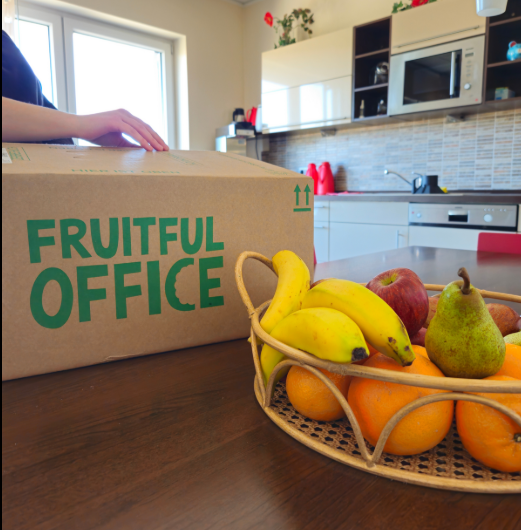
But what if healthier options were just as convenient? That’s where our office fruit delivery came in. We’ve been using Fruitful Office (a London based service that delivers fresh fruit baskets directly to workplaces across the city) for just over two years now, so I feel comfortable in touting the benefits our team have seen directly from this subscription as well as sharing insights some of our clients have from their own office fruit subscriptions.
Fruitful are quietly revolutionising how we snack at work. They’re making it as easy to grab a banana as it is to reach for a chocolate bar. For me, this removes the single major hurdle when it comes to impulse eating. In the same way I will drink twice as much water if I have my bottle nearby… if fruit is in sight I’m reaching for it before I walk a few flights of stairs to the vending machines. I can be a lazy person at times. I’m also a creature of habit, which plays into the office fruit basket ethos quite nicely – once you start snacking from it, soon you’ll notice if it’s not there!
There’s some compelling science backing this up too. Research from the WHO found that office wellness programs, including office fruit deliveries, reduced healthcare costs by more than a quarter. Adults who regularly eat ‘nutrient rich foods’ show reduced symptoms of depression and greater psychological wellbeing. For women navigating the unique pressures of corporate life, where we’re still fighting for equal pay while juggling multiple roles, these can be crucial lifelines.
I’ve seen firsthand how office fruit transforms workplace dynamics. Walking into a meeting room for the first time and finding a box of free fruit offers aa subtle change in the energy. The 3pm slump becomes manageable without the ‘sugar crash tax’ that inevitably follows that sweet, sweet biscuit fix. Team members start conversations around the fruit bowl that wouldn’t happen otherwise. There’s something inherently nurturing about an employer who provides fresh office fruit for their staff, it signals they value your wellbeing beyond just your productivity metrics. I do really mean this BTW, I’m not being paid in free fruit baskets (I wish!)
Sustainability matters
The sustainability ethos behind this matters too in my opinion. I can’t say this is the case for every office fruit delivery company but with Fruitful, fruit comes in a fully biodegradable crate that the guys pick up and reuse many times over. It’s a feel-good difference compared to the one-use wrappers from processed snacks. For companies serious about their environmental commitments, office fruit delivery offers a tangible way to reduce waste while supporting employee health. Many services source from local farms when possible, reducing transport emissions and supporting British agriculture. Although there is a limit to this (I don’t know any British farmers successfully growing bananas…)
Implementation couldn’t be much simpler either. Most office fruit delivery services offer flexible deliveries and allow you to adjust quantities based on your team size. Seasonal variety keeps things interesting, autumn brings crisp apples and pears, summer offers berries and stone fruits. An office fruit basket can be surprisingly cost effective; it’s typically less than what companies spend on coffee or Friday drinks, yet the health benefits far exceed either of those.
Changing workplace eating culture takes time. Some of us will always prefer their KitKat break, which is totally fine. What works, in my experience, is starting small. Begin with a small trial that explores a variety of different fruits and health snacks. Track consumption, snack preferences and feedback about energy levels, afternoon productivity and team morale. The results often speak for themselves.
For women especially (after all, that’s who I’m writing for), having readily available healthy options removes one decision from our already overloaded mental bandwidth. We don’t have to pack snacks or feel guilty about skipping lunch then binging on biscuits. The fruit is staring you in the face, making the healthy choice the easy choice.
The connection between the workplace stress and eating distress patterns isn’t going away. When work pressure intensifies, our relationship with food often becomes fraught. Office fruit isn’t a magic solution, but it’s a practical step towards creating work places that support rather than sabotage our wellbeing.
Next October, when International Fruit at Work Day rolls around again, perhaps more of us will actually remember it. Better yet, maybe it won’t feel like a special occasion because fresh fruit at work will have become your new corporate normal. Until then, consider this your invitation to start the conversation in your workplace. Because sometimes the small change, like swapping biscuits for bananas, creates the biggest impact on our daily wellbeing.

Bronze Permanence: Statues That Matter More Than Memory
I’m stoked to share the news that the city of Birmingham have given Dame Elizabeth Cadbury her blue plaque this week. She was a Victorian philanthropist who helped to transform education, healthcare and housing at Bournville Junior School (the institution she opened in 1906). The timing feels pretty loaded, arriving months after Belfast unveiled their bronze statues of Mary Ann McCracken and Winifred Carney outside City Hall. Three women. Three different centuries of impact, and one overdue conversation about whose stories get told in permanent materials.
The Other Chocolate Revolution
Dame Elizabeth wasn’t merely playing at the feel-good Victorian charity game. She walked into workhouses as a teen, volunteered at children’s hospitals and in that process saw exactly what poverty did to young bodies and minds. She married into that famous chocolate money and used every penny as ammunition against inequality.
The Woodland Hospital she built wasn’t just for healthcare. It was a statement that slum children deserved the same right to medical attention as wealthy ones. She understood something fundamental that still eludes some policymakers in the twenty twenties… you can’t educate malnourished, exhausted children. You can’t expect excellence from kids who’ve never seen beyond their street.
Cadbury refused to separate social issues; housing, health, education, she saw them all as part of an ecosystem. When World War One brought refugees to Birmingham, she didn’t offer sympathy and prayers. She built homes. At 78, she led the UK’s delegation to the World Congress of the International Council of Women. No retirement on her mind, quite the opposite – even deeper commitment as her influence grew.
Belfast’s Bronze Corrections
McCracken and Carney getting statues on Belfast City Hall’s lawn feels like historical editing in real time. McCracken was distributing abolitionist pamphlets on the streets of Belfast in the 1800s, wearing her Wedgwood anti-slavery badge like armour. She wasn’t asking for permission to challenge systems built on human trafficking. She handed out evidence, person to person.
Carney’s sculpture captures something different. The only woman inside Dublin’s GPO during the Easter Rising, typing the Proclamation of the Irish Republic while bullets flew past her head. She was James Connolly’s confidante who refused evacuation because the work wasn’t finished. A trade unionist, suffragist, Irish Citizen Army adjutant (that is an officer who assists the commanding officer with administrative tasks), each title representing a unique struggle most of us can’t imagine from our comfy office chairs. Their positions standing right next Queen Victoria’s monument creates an interesting visual dialogue between the different definitions of female power.
Why This Matters to NIWE
When I founded NIWE, people questioned the name pretty much constantly. The New Initiative for Women’s Eudaimonia sounds academic, maybe even pretentious. But eudaimonia is more than just ‘happiness’ or ‘contentment’. The word eludes deeper meanings of flourishing and living aligned with your deepest potential. I feel like these three women embodied that concept before we had corporate frameworks to describe it.
They didn’t wait for permission or structures to exist to facilitate change, they were the architects. Cadbury used chocolate profits to redesign Birmingham’s social framework. McCracken risked her business distributing anti-slavery literature when the economy depended on human bondage. Carney typed revolution into existence while an empire tried to silence her.
Walking past these monuments, future generations absorb their stories as more than historical footnotes. Instead, they have the same permanence as military generals and I love to see it. My two Shepherds, Kiwi and Nana, have more memorials in London parks dedicated to war dogs than to women who transformed education or healthcare!
I think about these women during NIWE’s (and my own) toughest moments. When resources feel stretched, momentum is zero and impact seems invisible. Cadbury organized refugee housing while raising her own six children. McCracken ran a muslin business while fighting slavery. Carney maintained trade union work while reshaping Irish independence. It gives me a healthy dose of perspective
The Uncomfortable Question
Here’s what bothers me about these recognitions. Why did Belfast wait until 2024 to acknowledge these women? Why is Cadbury getting her plaque 107 years after her death? The cynical answer involves International Women’s Day and institutional box-ticking. The real answer, I suspect runs deeper…
Fact is, we’re still uncomfortable with female power that doesn’t apologize. These women didn’t soften approaches, moderate demands or wait for ideal timing. They saw what needed doing and did it, consequences be damned. That’s not the narrative we’re taught about female leadership, even in spaces claiming to celebrate it.
NIWE exists because that discomfort persists. Women in (some) corporate settings still get coached to be less direct, less ambitious, less ‘aggressive’. We’re told to build consensus when sometimes you need to build institutions. We’re advised to work within systems these three women would have already ignored or dismantled.
NIWE isn’t trying to create the next Elizabeth or Mary Ann or Winifred. We’re ensuring the next generation won’t need to wait a century for recognition. They’ll already have claimed it.
Understanding Women’s Eating Distress in Corporate Environments
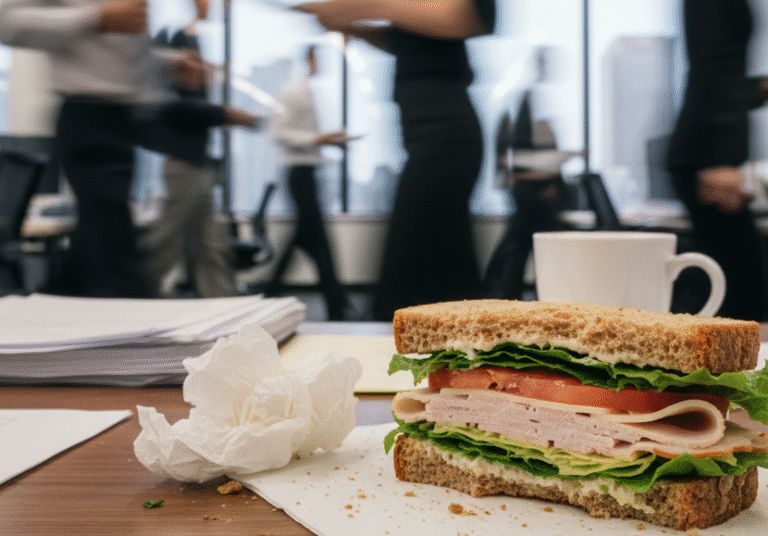
An increasingly stale sandwich sits untouched on my desk while a mountain of various emails pile up in my inbox. Sound familiar to anyone? For thousands of women navigating high pressure corporate environments across the UK, their relationship with food is, to say the least, complicated.
Health and Safety Executive statistics from the 2024-24 period revealed that women have significantly higher rates of work-related stress, depression or anxiety than men. But there’s a darker side that rarely gets the spotlight it needs: eating distress.
One in four UK women workers say they’re currently unable to manage the levels of pressure and stress they’re experiencing at work. Women aged between 35 and 54 are particularly stressed, with nearly one in six of this group reporting being stressed every single day. We’re managing teams while managing households, hitting quarterly KPIs while helping with homework. Food becomes both comfort and enemy, control mechanism and chaos creator. (I know you know what I’m talking about, even if you have a handle on this.)
Between 1.25 and 3.4 million people in the UK are affected by an eating disorder, with women being the most impacted as I mentioned, Women with eating disorders face particular challenges navigating food centric work events such as lunch hours, unexpected workplace treats, celebrations with abundant food, and business meetings over meals.
One (anonymous) participant in our own workplace study confessed that she avoids the lunchroom entirely, saying that her feeling was her colleagues were watching and judging every bite. The business world’s obsession with wellness programs ironically exacerbates this pressure. When your workplace launches weight loss challenges while you’re secretly battling disordered eating, the disconnect feels insurmountable.
The HSE stats confirm that more than half of women in the UK are stressed at work at least once a week, for 23% it’s at least once a day. Workload stresses 53 %of women, while chronic stress has been associated with higher uncontrolled eating and emotional eating. Let’s not underestimate the massive impact stress has on the physiology of our bodies; worldwide, autoimmune diseases (of which stress is a huge trigger) are affecting women more than men at an 80:20 ratio.
Even more interesting is looking at a Crohn’s disease, an immune disorder that affects the digestive tract. In childhood the gender split for patients is close to 50/50. However, when women reach their early twenties the numbers sky rocket, with the vast majority of cases being women from this point forward. I’m not saying there aren’t other biologic factors in place here, but we can’t overlook the fact this is when many women are reaching new levels in their careers while trying to balance families and other responsibilities…
We reach for the biscuits at 3pm not necessarily from hunger but from being purely overwhelmed and looking for easy comfort. We skip breakfast because there’s no time, then binge on takeout after working late, which feels like a well justified reward (I am still guilty of this regularly). This cycle feeds itself (no pun intended), stress triggered eating patterns that create more stress and push the cycle on.
UK women aged 25 to 44 feel stressed for an average of 12.4 days in any typical, compared to 8.7 days for men. When we add financial worry as the top external stress factor that affects 41% of all employees, the pressure intensifies. Research commissioned by the charity Mind found that 1 in 5 of us will take a day off due to stress, but 90 percent will give our boss a different reason for the absence, this shows just how much stigma we still have around stress and self-care, especially at work.
So.. what actually helps? You can start by recognizing that eating distress isn’t about willpower or weakness. It’s a legitimate response to overwhelming circumstances. Let’s explore a few recommendations below:
Flexible work arrangements
Flexible working arrangements can significantly alleviate stress and improve work life balance, especially for women with caregiving responsibilities. Remote work options, flexible hours, even part time roles make a genuine difference over the long term.
Office fruit delivery
Creating healthier food environments matters too. Simple changes like office fruit delivery services provide accessible, nutritious options without the loaded messaging of diet culture. I’ll be talking more about this in a future post. A meta-analysis of 56 peer-reviewed studies on workplace health initiatives (e.g. office fruit boxes and the like) found an average 26% reduction in healthcare costs and a 27% reduction in staff absence due to sick days.
Adults who ate nutrient rich foods like fruits and vegetables showed reduced symptoms of depression and greater positive psychological wellbeing. Having fresh apples and oranges available beats vending machine runs every time.
Support networks specific to the office
Build support networks within your workplace. Regular one on one check ins between managers and team members provide space for employees to discuss challenges including those related to mental health. Yet only 32 percent of working adults say their workplace had plans in place to help colleagues spot signs of chronic stress and prevent burnout. Sometimes just knowing someone notices when you’re struggling makes the difference.
Professional support backed my management
Professional support remains crucial. Employee assistance programs offering confidential counselling services can give you somewhere to turn when food and stress becomes too overwhelming. Beat, the UK’s eating disorder charity, provides targeted help for the hundreds of thousands women and men affected. NIWE offers community support specifically for women balancing corporate demands with personal wellbeing.
A nutritious diet combined with mindful eating is important in combating stress. But mindful eating looks different when you’re scarfing lunch between meetings. Focus on progress not perfection. Bring snacks you actually enjoy. Take five minutes to eat away from your desk, even if that means hiding in your car. Small acts of self-care will accumulate into tangible wins.
Stress in the office won’t change overnight, but we can change how we navigate it. With work related stress costing the UK economy £28 billion annually, employers have recognised the need for change. Eating distress thrives in isolation and shame, it weakens when we acknowledge its presence and seek support, at home AND at work. Your struggle with food doesn’t define your professional worth. You deserve nourishment, not punishment, especially when work demands everything you’ve got.

Leadership Transition: Ed Mayo leaves Pilotlight charity
After five years of big transformation leading the charity ‘Pilotlight’, Ed Mayo is stepping aside this October (already happened in fact), he’s passing the torch to Lisa Pearce. This leadership change signals an evolution of how businesses and charities collaborate through skilled volunteering.
Mayo joined the Pilotlight charity in 2020 during unprecedented Covid chaos times when small charities faced crushing pressures. The pandemic threatened their very survival all while communities needed their services more than ever before. Rather than scaling services back, Mayo instead doubled down on the charity’s core mission: connecting business expertise with charitable organisations through ‘pro bono’ volunteer services. Under his watch, Pilotlight doubled its skilled volunteer numbers and grew income by over 42 percent, supporting a grand total of 803 charities across the UK.
What strikes me most, personally, about Mayo’s approach isn’t merely the numbers though. It’s more his philosophy of “learning by doing good” that resonates deeply with those of us working to support women’s professional development.
At NIWE, I constantly see women struggling to balance career growth with meaningful contribution. Mayo demonstrated these aren’t competing priorities. Through Pilotlight’s core model, professionals dedicate roughly four hours weekly over several months, gaining experience while making genuine impact. The volunteers, coined as ‘Pilotlighters’, develop leadership skills in real world contexts, not theoretical classrooms.
Lisa Pearce (The new commander in chief, always nice to see a woman in these roles!) brings fresh perspective from her current role as interim CEO at Gingerbread and membership on the World Para Sports Unit Board. Her background in single parent support and disability sports suggests Pilotlight might expand its reach into communities facing a broader array of social challenges. She acknowledged the timing, saying
“At a time when social needs are rising and resources are stretched, Pilotlight’s work has never been more vital”.
Mayo’s journey reads like a masterclass in purpose driven leadership. Before Pilotlight, he led Co-operatives UK for eleven years after steering both the ‘New Economics Foundation’ and ‘National Consumer Council’. Each role built towards his belief that business skills shouldn’t remain locked within corporate walls when communities desperately need them. He was also responsible for connecting Pilotlight’s team of coaches with Eating Distress North East.
His next chapter will involve continued volunteering and writing, plus supporting causes like the Eve Appeal. For someone who co-founded the UK Pro Bono Association, stepping back from executive leadership doesn’t mean stepping away from service at all. The transition period will run through October, ensuring stability while Pilotlight enters its next phase. Mayo leaves behind more than improved KPIs, he’s embedded a culture where professional development and social impact reinforce each other, proving that doing well and doing good aren’t just compatible, they’re inseparable.